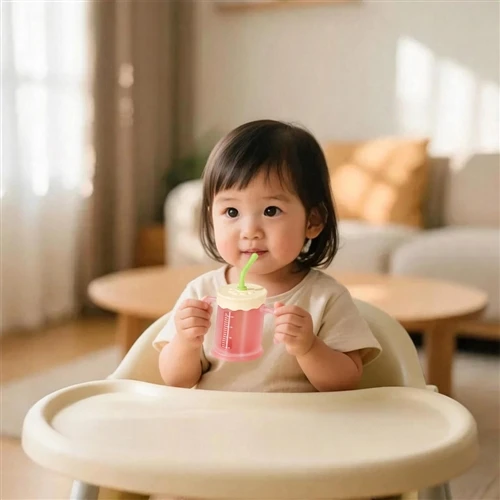
As an essential companion during feeding time, baby bottles available on the market today come in an increasingly diverse array of styles. They range from glass and stainless steel to plastic and silicone; some feature air vents or ventilation tubes, while others utilize gravity balls or straws; designs vary from straight-barrel shapes to curved contours. Choosing the right baby bottle is, in itself, quite an art form. I've noticed that some moms, unsure of how to make a selection, simply take the decisive-albeit costly-approach of collecting every variety available, bringing them home to test them one by one. However, baby bottles don't come cheap-prices can range from a few tens to several hundreds. So, how can we ensure we pick the *right* bottle without wasting a single penny? Moms, be sure to check out these 6 key steps for choosing the perfect baby bottle!
Consider the Material
Currently, there are many materials used for baby bottles on the market, which can be broadly categorized into four main groups: glass, plastic (including PP, PA, PPSU, and PE), silicone, and stainless steel.
As you can see, each material possesses its own unique advantages. For instance, glass bottles are clean and transparent, making it easier to monitor the remaining milk volume and its condition. Plastic bottles are lightweight and shatter-resistant; if your baby has started grasping the bottle independently, plastic offers a safer and more user-friendly option. Silicone bottles feature a soft, elastic texture that is both durable and resistant to breakage. Stainless steel bottles combine the benefits of easy cleaning and wear resistance, offering a relatively longer service life. Furthermore, all of these materials are free from Bisphenol A (BPA)-a chemical known to pose health risks to babies-so you can choose with confidence based on your specific needs.
Of course, it is also important to note that with prolonged use, baby bottles may eventually show signs of damage, retain odors, become deformed, or-particularly in the case of plastic materials-begin to leach chemical elements. Therefore, it is essential to replace them periodically!
Consider the Bottle Capacity
A baby's stomach capacity and the volume of milk consumed per feeding vary significantly depending on their age in months. Consequently, the required bottle capacity will also differ accordingly. This is why you can find bottles on the market today in a wide range of capacities, such as 60ml, 120ml, 330ml, and more. In response to this, one mom raised a question: "Why not just buy the largest size-the 330ml bottle-right from the start?" Moms in the comments section were quick to offer their answers: It's simply too big-likened to "toting a cannon"-making it tiring for a mother to hold for extended periods during feedings, and too heavy for a baby to grasp independently. Furthermore, the measurement markings on large bottles tend to be less precise, making them unsuitable for very young infants who require strict control over milk intake. When a bottle is oversized relative to the actual milk volume inside, the liquid cools down more rapidly; additionally, it increases the risk of the baby swallowing excessive air, which can lead to gas and bloating. This is indeed true; I, too, recommend selecting a bottle capacity based on your baby's current age and specific needs. The core principle is to upgrade gradually, following a progression from "Small → Medium → Large."
You can refer to the table below as a guide when selecting bottle capacities:
Consider the Nipple Material
The bottle and its nipple form an inseparable unit; since the nipple comes into direct contact with the baby's mouth, the material it is made of-and whether the baby finds it agreeable-is of paramount importance. Therefore, our first step in the selection process should be to evaluate the nipple material.
Currently, the three most common materials used for bottle nipples are latex, rubber, and silicone. Among these, latex nipples feature a soft texture that closely mimics the feel of a mother's breast, making them particularly suitable for babies who are resistant to bottle feeding. Rubber nipples offer superior elasticity and are well-suited for babies with a stronger sucking reflex. Silicone nipples are highly heat-resistant, boast a longer lifespan, and offer excellent value for money; however, they tend to be slightly firmer than their counterparts. You can make your choice based on your specific feeding requirements.
Additionally, I would like to remind you that nipples are more prone to damage, deformation, aging, and discoloration than the bottles themselves, necessitating more frequent replacement. It is advisable to inspect the nipple for any signs of abnormality before every feeding to ensure a safe and comfortable experience for your baby.
Consider the Nipple Size/Model
Selecting the appropriate nipple size is an art in itself, as different sizes and hole diameters correspond to varying milk flow rates-some slow and steady, others relatively fast. It is crucial to select a nipple that precisely matches your baby's specific needs. Common nipple sizes include various specifications such as SS, S, M, and L. Nipple hole designs also vary: some feature small round holes, others have Y-shaped or cross-shaped slits, and there are even "duckbill" shapes suitable for older babies.
However, it is important to note that different brands do not follow a standardized system for classifying bottle and nipple models. Therefore, Brother Fen suggests that when making a selection, your primary reference should be the specific model guidelines provided by the brand you have chosen (such as the recommended age range for a given size, the flow rate corresponding to a specific hole diameter, and the intended usage scenarios).
Consider Features and Functions
Anti-colic bottles, bottles with gravity balls, straw bottles, curved bottles... Baby bottles come in a wide variety of styles. This abundance of options can sometimes leave moms feeling a bit overwhelmed when trying to choose. So, what exactly are the advantages of these bottles with their distinct features and functions?
As you can see, each of these different bottle types possesses its own unique characteristics. For instance, anti-colic bottles utilize designs-such as air vents, internal tubes, or valves located at the base of the bottle-to equalize the pressure inside and outside the bottle. This mechanism helps minimize the amount of air a baby swallows while nursing, thereby achieving an "anti-colic" effect. Bottles equipped with a gravity ball offer greater versatility across different scenarios; whether the baby is lying down, lying on their tummy, or sitting up, the gravity ball moves in tandem with the liquid level, ensuring the baby can drink smoothly. Direct-drinking straw bottles are generally better suited for older babies and are not ideal for use while lying down. Curved bottles feature a slight built-in tilt angle; a gentle tilt is all that is needed to keep the nipple filled with milk, eliminating the need to lift the bottle high. This design also helps reduce the likelihood of the baby swallowing air, making it a particularly suitable choice for younger babies.
Of course, the designs of these specialized bottles are not mutually exclusive. For example, an anti-colic bottle can be fitted with an optional gravity-ball straw attachment, and a curved bottle can be paired with an anti-colic nipple. These design elements can be combined flexibly, allowing you to make a selection that best meets your specific needs.
Consider the Bottle Opening Size
In addition to the points mentioned above, you may also want to pay attention to the size of the bottle opening:
Wide-neck bottles (4–8 cm) allow for easy access-whether with your hand or a bottle brush-during daily cleaning, making them easier to sanitize; furthermore, they minimize spills when pouring in powdered formula.
Standard-neck bottles (approximately 3.5 cm) offer the advantage of greater accessory compatibility; nipples, handles, and other accessories from most brands on the market are interchangeable with one another.
However, many brands have now optimized their wide-neck bottles by launching dedicated accessory lines designed to fit them perfectly, ensuring that parents can make their choices with complete peace of mind.
In summary, baby bottles come in a wide variety of styles, each with its own unique strengths and limitations. When making a selection, the key is simply to base your decision on your baby's age and the specific situations in which the bottle will be used.