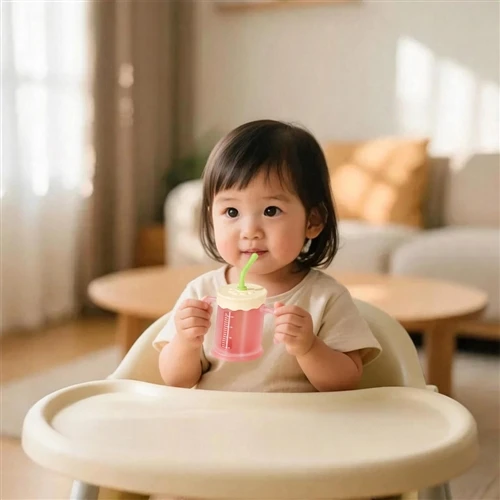
The market offers a vast array of sippy cups, available in various materials and styles. How, then, does one select a sippy cup that is truly suitable for a baby? The selection process should primarily adhere to the following principles:
Material Selection
When choosing a sippy cup, it is best to opt for those made from imported PP (polypropylene) material. This is because PP is food-grade, safe, BPA-free, and poses no harm to a baby. When making your selection, check the product's outer packaging to see if it explicitly states that the materials are imported; imported PP materials tend to be more durable than domestically produced ones. Additionally, verify whether the cup is compatible with high-temperature sterilization methods, such as boiling or steam sterilization. Some sippy cups may look attractive, but if they are not made of PP, high-temperature sterilization can cause them to release harmful gases, posing a significant risk to a baby's health.
Spout Type
Sippy cups typically fall into two categories: "duckbill" (or spout) style and straw style. Both types are generally manufactured using the same silicone material found in baby bottle nipples; this material is very soft and ensures that the baby's gums remain unharmed while drinking. The duckbill style is better suited for younger babies, as its shape closely resembles that of a standard bottle nipple, making it easier for them to suck from. Straw-style cups, on the other hand, typically feature a larger capacity and are more appropriate for slightly older babies. It is recommended to start with the duckbill style to facilitate the transition from bottle feeding, and then switch to the straw style once the baby's fluid intake increases.
Measurement Markings
Not all sippy cups feature measurement markings. However, cups with graduated markings are more convenient to use, as they allow you to accurately monitor exactly how much liquid your baby consumes during each feeding session.
Handles
Sippy cups equipped with handles offer an additional benefit: they allow babies to practice their fine motor skills-specifically finger grasping-while drinking, thereby helping to promote cognitive development.
Leak-Proof Design
Many sippy cups lack a leak-proof mechanism. Consequently, spills can easily occur while the baby is drinking, or when the cup is being carried in a bag or taken along during outings.